In this series we build a fictional Dutch business a complete website, purely through the chat in DirectAdmin, in about an hour. This time B&B De Lindehoeve in Giethoorn: three rooms called Water, Riet and Linde, breakfast included, a bike and a boat for hire, and prices that differ per season. The model: OpenAI Codex on GPT-5.6 Sol, automatic mode. The site is live at bnb.nieuwesite.nl and stays up.
This episode is the fastest so far, and at the same time the only one where the first instruction did not work at all.
The numbers
| Task | Instruction | Time | Approvals |
|---|---|---|---|
| 1 | Install WordPress | 50 s | 0 |
| 2 | Build the whole site | 164 s | 0 |
| 3 | Make it bilingual | 156 s | 0 |
| 4 | Booking form with availability | 140 s | 0 |
A total of 510 seconds, or 8 minutes and 30 seconds for four instructions. Not once did it ask for an approval, because the run was in automatic mode.
The instructions
1. "Install WordPress with the title B&B De Lindehoeve." 50 seconds, and then it stopped. The account had reached the maximum of five databases, so there was no room for another WordPress installation. Its answer was what you want to hear: the installation could not go ahead, no half installation was left behind, and which existing database may go? With the addition that deleting could wipe data belonging to another website.
In automatic mode that is exactly the right behaviour. Automatic means it does not have its own work approved, not that it clears out somebody else's database to be able to continue.
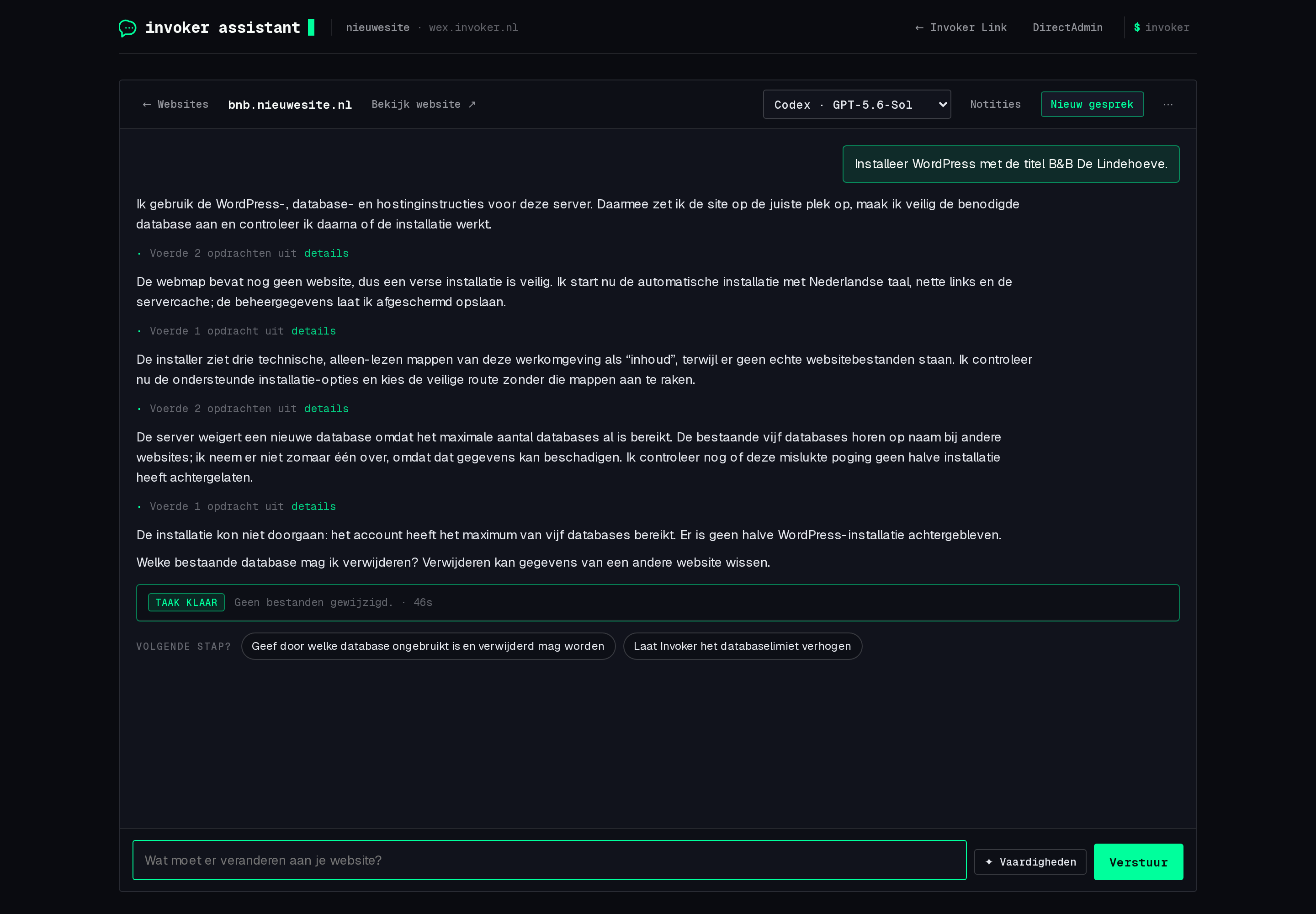
2. "Build a custom theme for B&B De Lindehoeve in Giethoorn: three rooms (Water, Riet and Linde) with photo placeholders, prices per season, breakfast included, bike rental and a boat. A warm, calm look with plenty of white and green. Homepage, rooms, surroundings, contact. No standard template." 164 seconds. And this is where it gets interesting, because there was no WordPress to build a theme for.
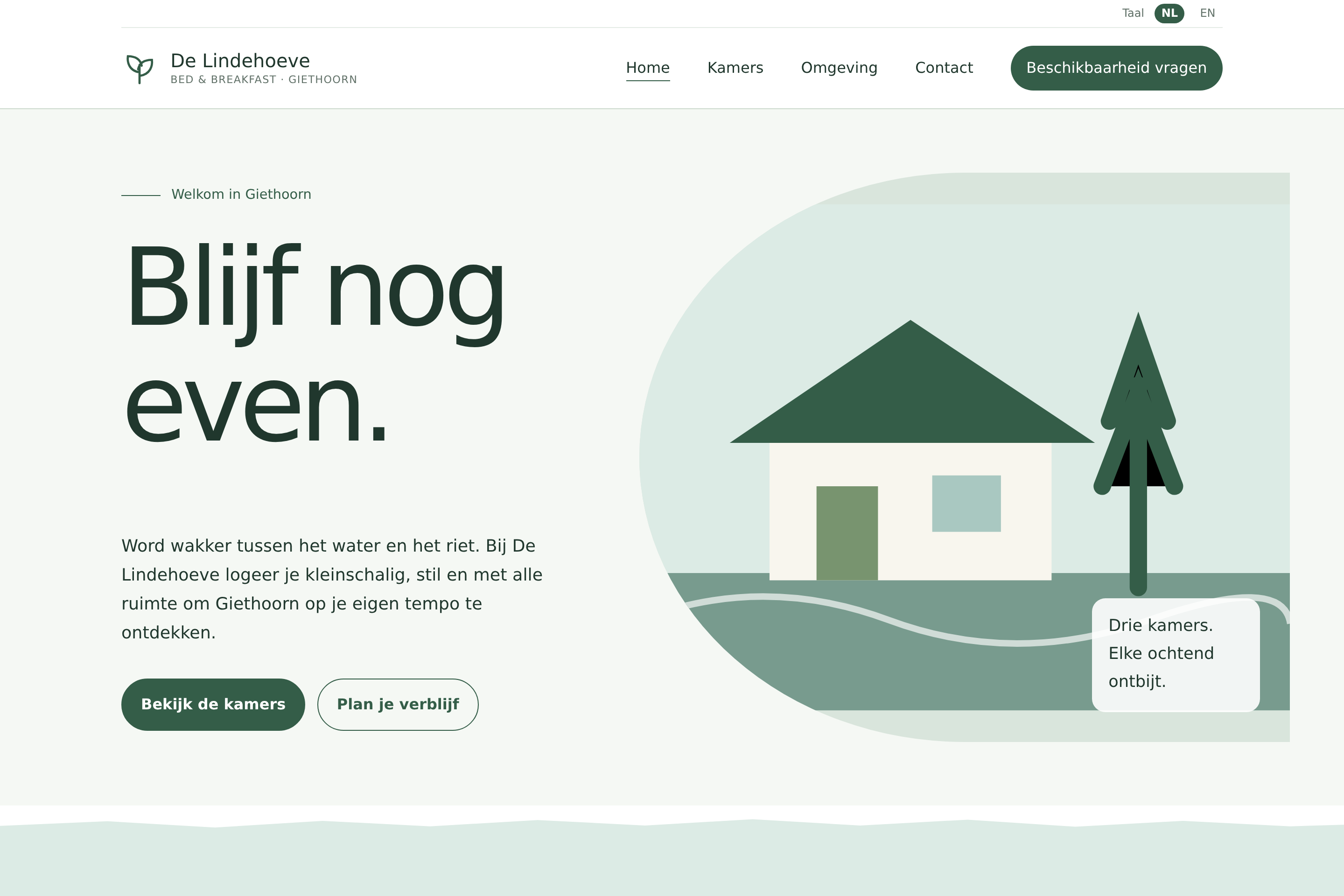
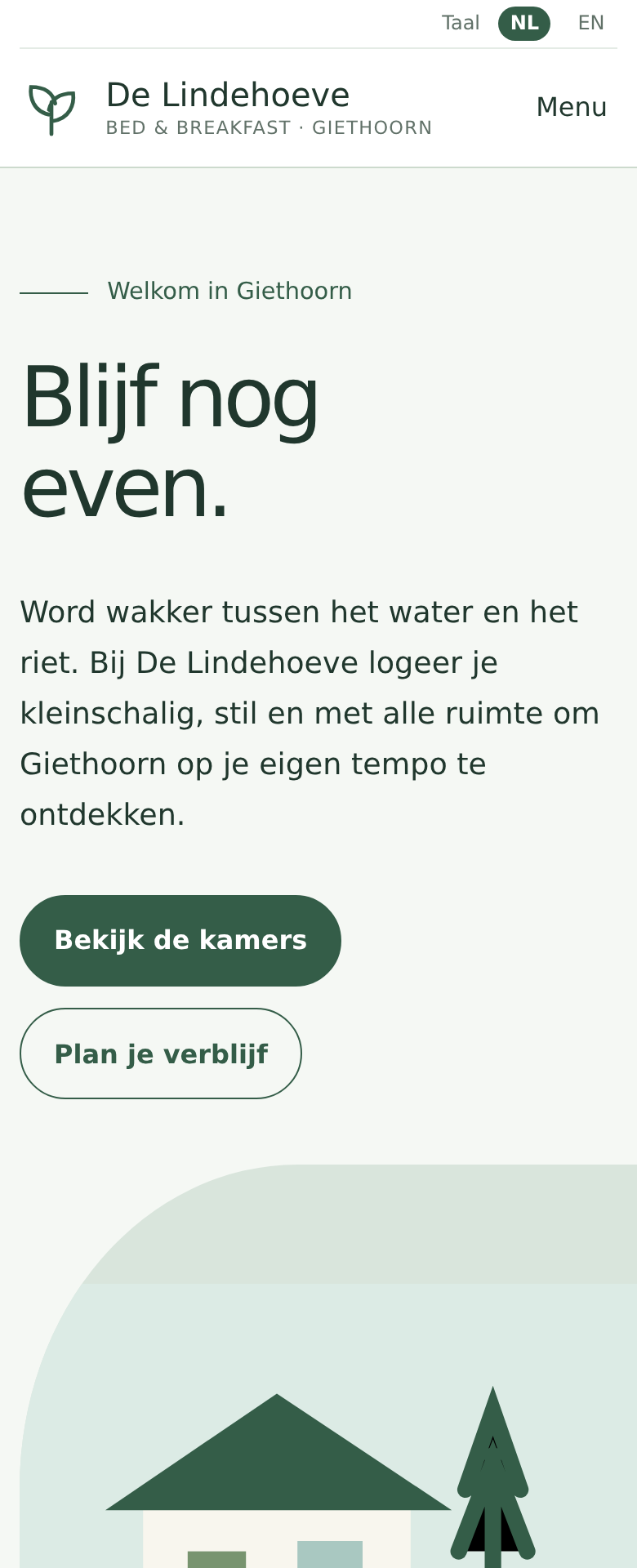
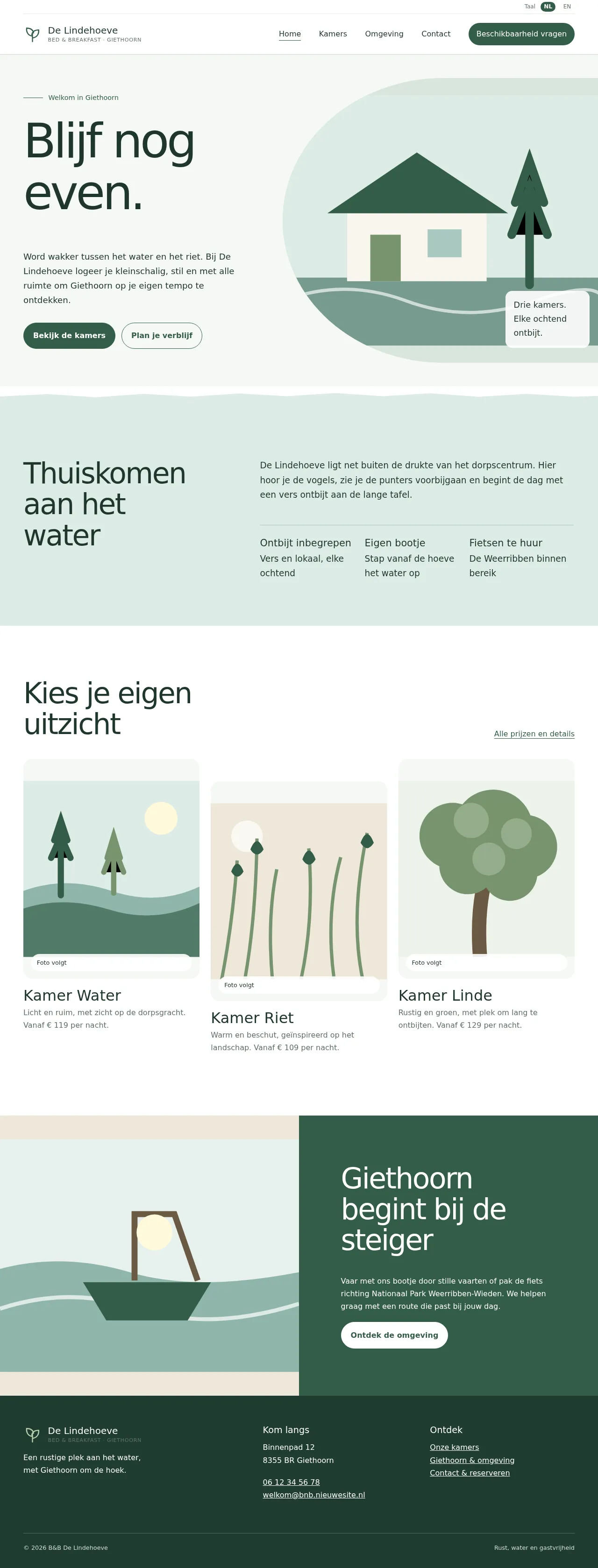
So it built the site without one. Eleven files: four pages, a shared header and footer, a stylesheet, some JavaScript, an illustration of its own, and a robots.txt and a sitemap.xml thrown in. White and green, calm typography, the three rooms with space for photos, the seasonal prices in a table, and a request form with spam protection at the bottom. Address, phone number and prices it filled in with recognisable example values, and it said so itself.
3. "Make the site bilingual, Dutch and English, with a language switch at the top and a translation per page. Do not use a paid plugin." 156 seconds, twelve changes. Language switch at the top, all pages translated, and the buttons, the form labels and the messages you only see when you fill something in wrong. The chosen language is remembered on a later visit, and the English pages were added to the sitemap.
4. "Build a booking request form per room: arrival, departure, number of guests, breakfast preference, remark. Check availability against a simple calendar in the admin, email the request to the owners and show a confirmation in the chosen language." 140 seconds. The form got every field asked for, availability is checked against a calendar the owners keep themselves on an admin page, and the request goes to the house by email. Confirmations and error messages are in Dutch and English.
Two things it mentioned itself, and that is the value of that last bit of the answer. It assumed a maximum of two guests per room, because the instruction did not say. And no real email was sent during testing, so that still has to be done once by hand.
The whole site, page by page
All four pages as they are live now, as a full page screenshot, desktop and mobile. Scroll inside the window to see a whole page.
What went wrong
The first instruction, and that was not the model's fault. Five databases is the limit of this plan, and that limit was already full. In the three previous episodes it never came up, because there an existing site was rebuilt rather than a new installation being put down.
What we had not expected is that the rest of the run got along fine without it. The instruction asked for a theme, it delivered a site. To a visitor the difference is invisible: four pages, a working form, fine on mobile. To the owner the difference is real, because without WordPress there is no admin screen where you change a price yourself. That now goes through the admin page it built for that purpose in task 4.
What we learned
- A limit on your plan is not an error you see coming. It surfaces at the worst possible moment, namely at the first step. For a new site, check whether there is still room for a database.
- Automatic is not careless. It could have chosen to delete a database and carry on. It stopped and asked, with the warning attached.
- Translations live in the messages, not in the texts. Translating the visible pages is the easy part. The error message under a wrongly filled in date field is where it goes wrong in practice.
- The last bit of the answer is the most important. The assumptions and the "I did not test this" are always in there. That is your to-do list.
Which model and why
GPT-5.6 Sol is clearly faster than GPT-6-Astra in episode 1, which took around 25 minutes for four instructions, and faster than Claude Opus and Sonnet in episode 2 and episode 3. That is not a fair race, because these were different tasks from a different starting point.
Where it stands out is persistence. When WordPress was not possible, it built a site that answers the description. That is handy and it is something to keep an eye on, because it does not ask whether that was the intention. Which Codex model to pick for what is in which Codex model to pick.
If you want to try this yourself, connect Claude or Codex in Invoker Link with your own subscription; the plans are at web hosting.